The Power of Unified Data & Systems for Modern Manufacturers
According to a 2025 report from The Manufacturer in conjunction with Barclays, digital transformation is the top priority for almost half of manufacturing leaders. But the reality is that digital adoption to date has been slow. This lag can be attributed to several factors, including the anxiety of change and assumed implementation cost, as well as a lack of visibility around the benefits. Here, Josephine Coombe explains how businesses can adopt operating systems at a rate that suits them, without compromising on long-term integration.
The pressure on UK manufacturers is intense. Amidst workforce shortages, rising costs and ever tighter compliance standards, maintaining day-to-day operations and addressing immediate issues is the priority, leaving little time for long-term operational planning.
Barriers to Change – The Chicken and Egg Dilemma
Manufacturers need a better way to manage operating pressures, but those same pressures are eating up the time needed to implement new changes. This leaves manufacturers in stagnation, meeting issues as they arise, but with little space to consider how to address underlying operational gaps.
As a result, systems are often introduced out of necessity, reactive, rather than as part of a proactive long-term strategic plan. This can result in a series of disparate point solutions operating within one business, which cannot communicate without significant manual input and which do not ladder up to a single, overall data system.
Bridging the Gap with Nulogy’s Manufacturing Operating System
To bridge the gap between prioritising immediate operational needs and the implementation of a business-wide, integrated operations strategy, Nulogy developed its Manufacturing Operating System (MOS).
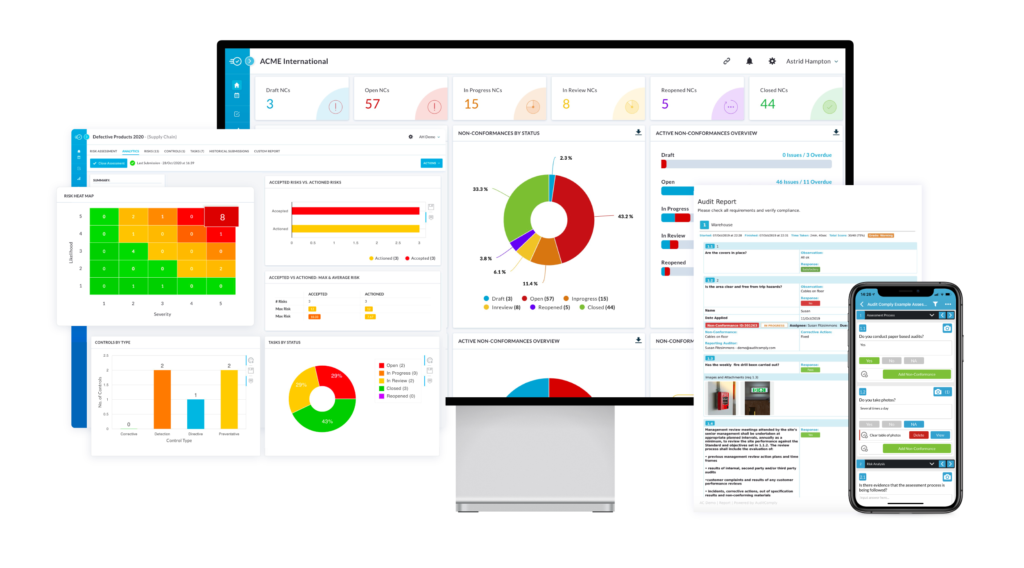
While Nulogy MOS has the capacity to unify production, quality, compliance, maintenance and warehouse activities on a single platform, it allows customers to start with the solution which meets their greatest challenges today. This means that pressured manufacturers can prioritise solving the issue in front of them, with the ability to scale as and when is practical for the business.

The Challenge of Integrating Legacy Systems
Manufacturers are also concerned about the costs associated with integrating new systems. Manufacturers who have already implemented or developed tools may be reluctant to remove a system that works partially, albeit in isolation from other systems within the business. By implementing an easily interoperable platform such as Nulogy MOS, manufacturers can consolidate their data flow into a single platform.
This connectivity allows manufacturers to integrate their systems (such as ERPs) or homegrown solutions into one shared source of data truth. Connecting to a MOS can also extend the lifespan of their legacy solutions, such as WMS and MES.
An Evolving Ecosystem for UK Manufacturers
Once all systems are connected into a single foundation, real-time analytics can take a manufacturer from meeting operational requirements to making informed strategic decisions that improve business outcomes. Early MOS users, for example, report reduced material waste, improved visibility and better equipment efficiency.
Current Nulogy solutions, all of which sit within the MOS ecosystem, include Environmental Health & Safety, Quality Management System, Supplier Compliance Management, Smart Factory and Shop Floor. This portfolio supports the entire manufacturing lifecycle and is evolving and expanding constantly, growing to meet the needs of UK manufacturers as they develop.
End-to-End Visibility and Future Outlook
By connecting workflows across teams and sites, manufacturers can achieve end-to-end visibility, which in turn delivers greater standards of quality and compliance, cost and time efficiencies and much-needed support amidst the current pressures influencing UK manufacturing.